
Government Job Eligibility in Pakistan: A Complete Guide for 2026
The definitive framework for government job eligibility in Pakistan in 2026 relies on a synergy of HEC-verified educational credentials, strict provincial domicile quotas, and age-calculated merit as defined by federal and provincial service commissions.
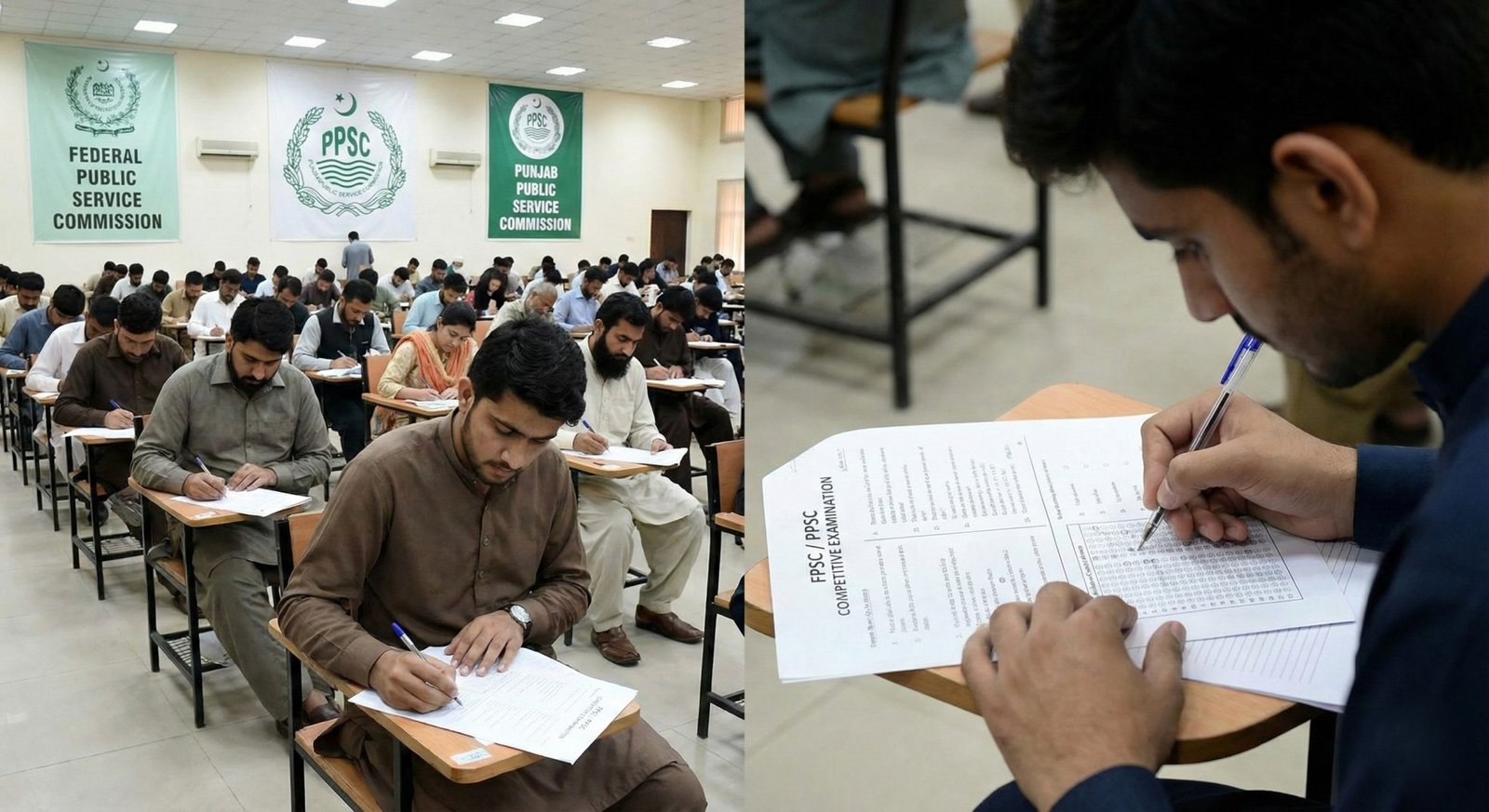
Finding a government job in Pakistan remains a top priority for millions of graduates; however, the eligibility criteria can often feel like a maze of complex rules and varying provincial requirements. This guide serves as your definitive roadmap for navigating the public sector landscape in 2026.
Government Job Eligibility in Pakistan: The Essential Framework for 2026
The structure of public service in Pakistan is divided into federal and provincial tiers; consequently, the eligibility standards often depend on the specific department and the scale of the post. To secure a position, you must first understand the Basic Pay Scale (BPS) system; this system ranks jobs from BPS-01 to BPS-22. Most entry-level officer positions for graduates begin at BPS-17; meanwhile, clerical and technical support roles typically range from BPS-05 to BPS-15.
Core Nationality and Domicile Requirements
The first hurdle for any applicant is citizenship; you must be a citizen of Pakistan or a permanent resident of Azad Jammu and Kashmir to apply. Furthermore, the concept of the “domicile” is the most critical factor in Pakistani job applications; it determines which regional quota you fall under. The federal government allocates seats based on a specific percentage for Punjab, Sindh (Urban/Rural), Khyber Pakhtunkhwa, Balochistan, and Gilgit-Baltistan. If you hold a domicile for a specific region, you can only compete for the seats reserved for that area; nevertheless, a small percentage of seats are usually reserved for “Open Merit” which allows candidates from across the country to compete against each other.
Age Limit Standards and Relaxations
Age is often the strictest criteria in government recruitment; generally, the age bracket for most BPS-17 officer roles is 21 to 28 or 30 years. However, the government provides significant age relaxations under specific circumstances; for example, candidates from scheduled castes or Buddhist communities often receive a 3-year relaxation. Furthermore, if you are already a government servant with at least two years of continuous service, you may be eligible for an extension of up to 10 years or until the age of 55.
Educational Qualifications for Federal and Provincial Roles
Education is the backbone of your application; therefore, your degree must be recognized by the Higher Education Commission (HEC) of Pakistan. Without an HEC-attested degree, your eligibility is effectively void in the eyes of the testing agencies.
Primary and Secondary Education Roles
For lower-scale jobs such as naib qasids, drivers, or security guards, the requirement is usually Primary or Matriculation; these roles focus more on physical fitness and basic literacy. For clerical positions like Lower Division Clerks (LDC) or Upper Division Clerks (UDC), an Intermediate (FA/FSc) certificate is mandatory; additionally, a minimum typing speed—usually 30 to 40 words per minute—is a non-negotiable part of the eligibility.
Professional and Specialized Degree Requirements
Higher-level BPS-17 posts require a minimum of 16 years of education; this translates to a Master’s degree or a 4-year Bachelor’s degree. If you are applying for a specialized role—such as a Medical Officer, Engineer, or Legal Advisor—you must possess a professional degree like an MBBS, BE, or LLB. It is vital to remember that these degrees must also be registered with their respective professional bodies; for instance, doctors must be registered with the PMDC and engineers with the PEC.
Navigating Testing Agencies: FPSC, PPSC, and SPSC
In Pakistan, the recruitment process is mostly centralized through various commissions; these bodies ensure that the government job eligibility in Pakistan is maintained through transparent testing.
Federal Public Service Commission (FPSC) Criteria
The FPSC handles recruitment for federal ministries and the prestigious Central Superior Services (CSS); the CSS exam is the most famous competitive exam in the country. To be eligible for CSS 2026, you must be between 21 and 30 years old and hold at least a second-division Bachelor’s degree. The FPSC is very strict about its cut-off dates; usually, your age and qualification are calculated based on the closing date of the advertisement.
Provincial Commissions: PPSC, SPSC, KPPSC, and BPSC
Each province has its own commission to fill provincial department vacancies; for example, the Punjab Public Service Commission (PPSC) often has different age limits than the Sindh Public Service Commission (SPSC). In Punjab, there is frequently a general age relaxation of 5 to 7 years for both males and females; however, in Sindh, the government occasionally announces a blanket age relaxation of up to 15 years for certain departments. You must check the specific “Service Rules” of the department you are interested in; because these rules dictate the exact nuances of the eligibility.
Physical Standards and Medical Fitness
Beyond brains and degrees, many government jobs require physical prowess; this is especially true for the Uniformed Forces like the Police, Army, Frontier Corps, and Motorway Police.
Height and Chest Measurements
For male candidates, the standard height requirement is usually 5 feet 7 inches; for females, it is typically 5 feet 2 inches. Chest measurements are also a factor for males; generally, a measurement of 33 inches with an expansion of 1.5 inches is required. If you do not meet these physical benchmarks; your application will be rejected during the initial physical screening regardless of your academic excellence.
Vision and General Health
Visual acuity is another critical pillar of government job eligibility in Pakistan; most roles require 6/6 vision with or without glasses. During the final stages of recruitment, candidates must undergo a comprehensive medical examination; this exam checks for chronic diseases, hepatitis, and general physical disabilities. While there are reserved quotas for “Special Persons” (Disabled), they must still be fit to perform the specific duties associated with the job.
How to Verify Your Eligibility for 2026
Before you spend money on application fees, you must perform a self-audit; this ensures you don’t waste time on roles for which you are technically disqualified.
Also check: Free Job Eligibility Checker by Resume
Checking the Official Advertisement
Every job starts with an advertisement in major newspapers or on official websites; you must read the “Minimum Qualification” and “Experience” columns very carefully. Sometimes a job requires “Post-Qualification Experience”; this means that any work you did before getting your degree will not be counted toward your eligibility.
Equivalence Certificates for Foreign Degrees
If you have studied abroad or completed O/A Levels, you cannot apply with your original transcripts alone; you must obtain an equivalence certificate from the IBCC (for school level) or HEC (for university level). This certificate translates your foreign grades into the Pakistani percentage system; consequently, this allows the testing agencies to rank you against local candidates fairly.
Common Obstacles and How to Overcome Them
Many candidates fail not because of lack of knowledge; rather, they fail because of administrative errors or misunderstandings of the rules.
Check Out:Junior Clerk Jobs in Sindh 2026: Directorate General – Mines & Mineral Development Department
The Issue of Result Awaiting Candidates
A common question is whether you can apply if your final exams are over but the result is not yet declared; unfortunately, for most government jobs, you must have your final transcript in hand by the closing date of the application. There are very few exceptions to this rule; therefore, it is better to wait for the next cycle than to have your candidacy canceled later in the process.
The Three-Chance Rule
For many competitive exams like the CSS or PPSC departmental exams, there is a limit on the number of attempts; usually, you are allowed three chances for a specific post. If you appear in the exam and fail, it counts as a used chance; however, if you apply but do not show up for the test, most commissions do not count it as an attempt. You should use your chances wisely; only sit for the exam when you feel fully prepared to meet the government job eligibility in Pakistan.
Departmental Permission Certificates (DPC)
If you are already working in a government department and wish to apply for another job, you must apply “Through Proper Channel”; this involves obtaining a DPC from your current employer. Failing to provide a DPC during the interview can lead to disqualification; even if you have topped the written test.
Why Understanding Eligibility is Your First Step to Success
In my experience running a job search platform, I have seen thousands of brilliant candidates lose their dream opportunities not because they lacked talent, but because they overlooked a small detail in the eligibility criteria; consequently, I always advise applicants to treat the “Eligibility Section” of an ad with more respect than the “Syllabus” itself.
The landscape of government recruitment in Pakistan is shifting toward a more meritocratic and digitally-driven model for 2026; therefore, you must be proactive. Don’t wait for the perfect job to appear before you fix your domicile issues or get your HEC attestation in order. Eligibility is not just a hurdle; it is the foundation of your career security. If you align your academic background with the right provincial quotas early on, you significantly increase your chances of landing a stable BPS-scale position. My mission is to ensure that no qualified Pakistani graduate is left behind simply because they didn’t understand the rules of the game.
Conclusion: Preparing for a Stable Future
Securing a government position in 2026 requires more than just studying; it requires a strategic understanding of the eligibility landscape. By keeping your documents updated—especially your domicile and HEC-attested degrees—you place yourself ahead of the competition. Government jobs offer unmatched job security and pension benefits; so, the effort you put into understanding these rules today will pay off for decades to come.
Frequently Asked Questions: Navigating the 2026 Recruitment Cycle
What is the maximum age limit for government jobs in Pakistan for 2026?
The general age limit for most officer-grade positions remains 28 to 30 years; however, specific relaxations apply for candidates from backward areas or government servants. You should always check the specific department’s service rules; because these can extend the limit up to 35 or 45 years in special cases.
Can I apply for federal jobs with a provincial domicile?
Yes; however, you will only be eligible for the seats allocated to your specific province’s quota. The federal government divides vacancies among Punjab, Sindh, KPK, and Balochistan; consequently, a candidate with a Punjab domicile cannot compete for seats reserved specifically for Sindh Rural.
Is a 14-year Bachelor’s degree sufficient for BPS-17 posts?
Most high-level competitive exams now require a 16-year education or a four-year BS degree; nevertheless, some departments still accept a 14-year degree with a second division. If you have a two-year degree, you must ensure it is equivalent to the required qualification level; otherwise, the testing agency will reject your application at the screening stage.
How do I verify if my degree is valid for a government job?
Your degree must be recognized by the Higher Education Commission (HEC); similarly, professional degrees like engineering or medicine require registration with the PEC or PMDC. Verification is a mandatory step before the final interview; therefore, it is wise to start the attestation process early in 2026 to avoid delays.
Does the government allow fresh graduates to apply for BPS-17 roles?
Many entry-level officer roles through the CSS or PMS are designed specifically for fresh graduates; these roles typically do not require prior work experience. The primary requirement is your academic merit and passing the competitive examination; thus, you should focus on your written test preparation as soon as you receive your final transcript.